An ensemble with character
The castle's roots stretch back to the Middle Ages. It likely consisted of several fortified buildings surrounding a courtyard, parts of which are still recognizable in the current structure. The roof of the main building dates from the fifteenth century; other elements may be even older.
Veulen Castle is more than a stately main building. It is an ensemble of buildings, developed over the centuries, each with its own role and story. And together they form the silent protagonists in the living heritage that Veulen Castle is today.
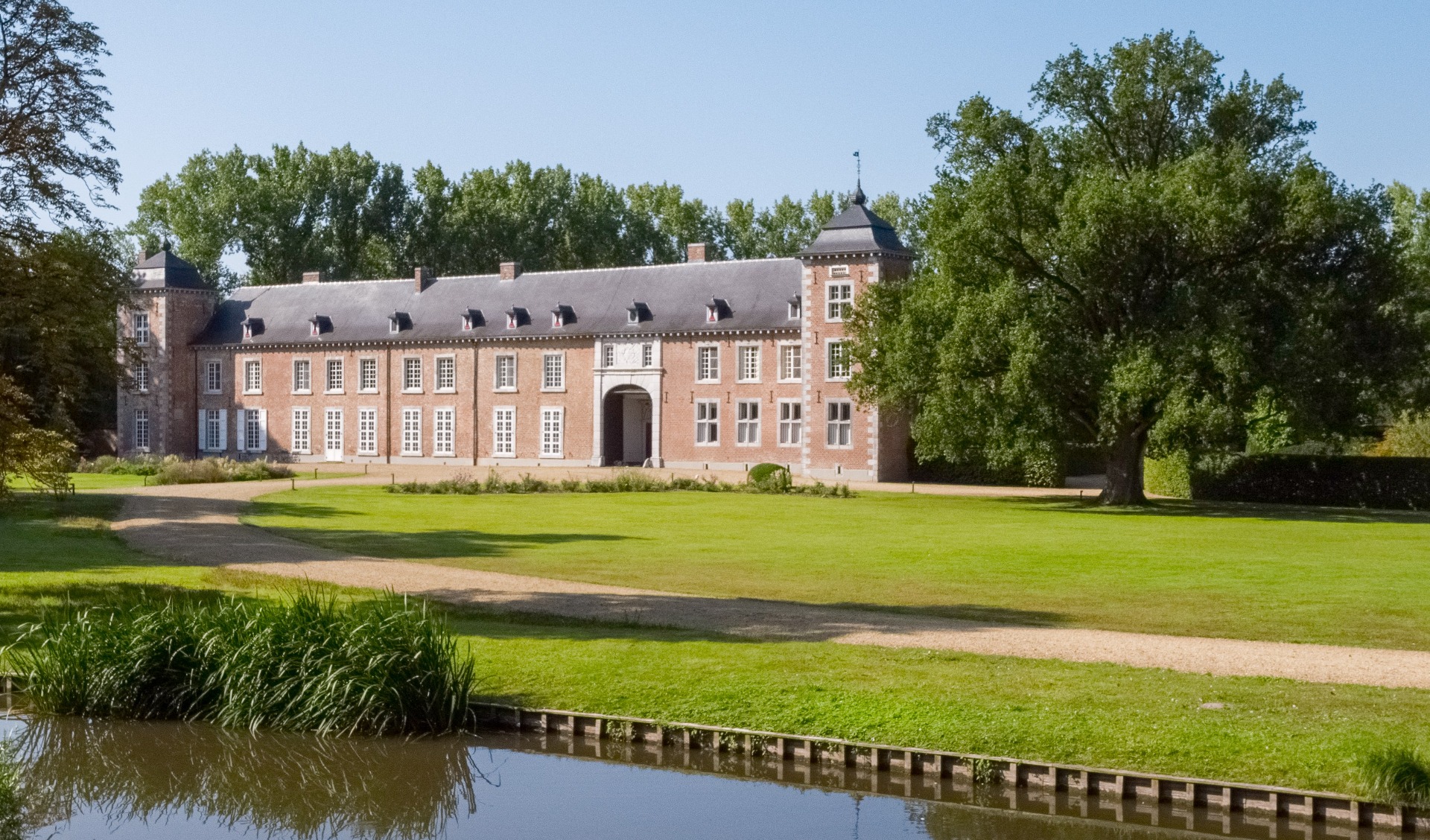
The Main Building
At the heart of the estate is the castle itself—a manor house that largely acquired its outline around the mid-18th century. But if you look closely, you'll discover traces of a much older past: a roof structure from the fifteenth century, walls that may date back to the Middle Ages. The complex once consisted of fortified wings surrounding a courtyard. Over the centuries, it was transformed into a residential complex, enhanced with towers, larger windows, and an asymmetrical gateway.

The Tenant's House
At the edge of the estate lies the former tenant's house. Once the beating heart of rural management, where agriculture and life intersected. Today, this building testifies to the intertwining of nobility and the land, between residence and the rhythm of the fields.

The Servants' House
Modest in scale, but not in significance: the servants' house provided accommodation for those who worked on the estate. This house exudes simplicity, yet bears the marks of generations who kept the castle running through daily dedication and craftsmanship.

The Tithe Barn
Monumental and functional: the tithe barn is a rare, preserved testament to a centuries-old system in which tenants paid a tenth of their harvest to the lord. With its robust structure and distinctive stonework, the barn tells the story of agricultural rhythm and feudal order.

The Old Bakery & Brewery
In the shadow of the castle, the old bakery and brewery also recall a time when everything was produced on the estate itself. From daily bread to craft beer—life at Veulen was self-sufficient, structured, almost monastic in its regularity.